Solutions
Fire Damage Claims
We help restoration contractors organize fire, smoke, structural, contents, and rebuild documentation into claim support built for complex carrier review.
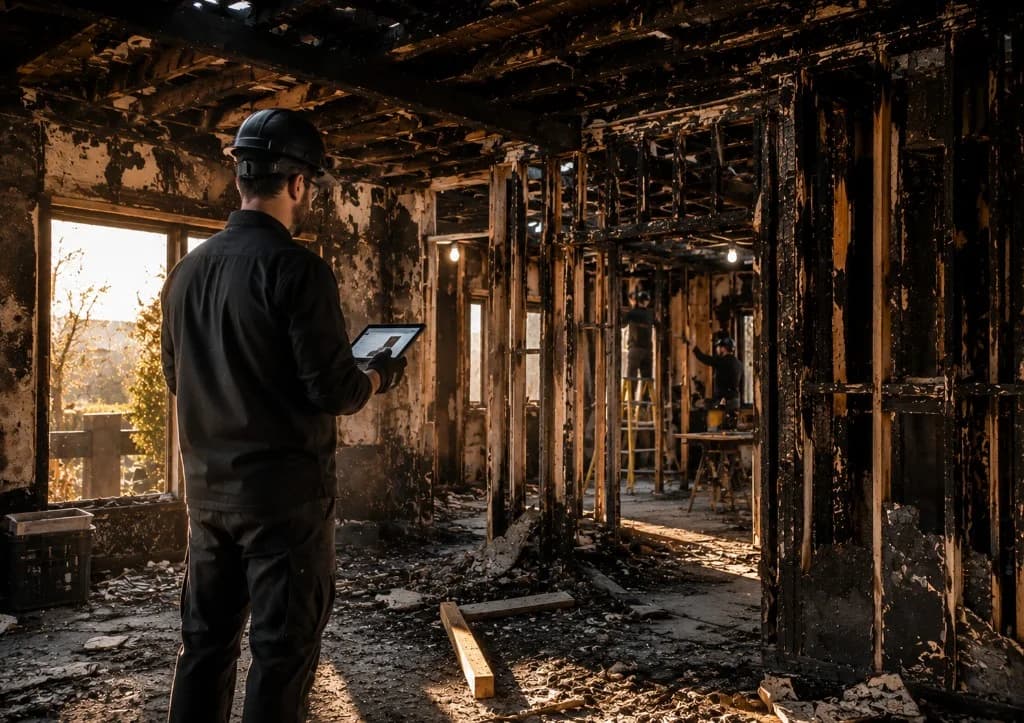
Fire claim support
Built for complex rebuilds, smoke losses, and multi-trade scopes
Fire claims rarely involve one clean scope. Claims Ninja helps contractors organize the structure, contents, mitigation, cleaning, code, and rebuild documentation needed to support the claim.
Structural Rebuilds
Support for demolition, framing, roofing, mechanical trades, finishes, and reconstruction scope alignment.
Smoke & Odor Losses
Documentation support for cleaning, sealing, deodorization, HVAC concerns, and affected material review.
Contents Coordination
Help aligning structure and personal property workflows when pack-out, cleaning, storage, or replacement are in play.
How it works
From fire file to claim strategy
- 01
Submit Claim Materials
Upload photos, estimates, mitigation records, engineering notes, contents documentation, carrier letters, and rebuild details.
- 02
We Build the Loss Picture
Our team reviews affected areas, fire and smoke damage, structural considerations, trade scopes, code items, and estimate gaps.
- 03
Supplement Opportunities Are Identified
We flag missing line items, pricing issues, scope gaps, documentation needs, and items that may warrant carrier review.
- 04
Contractor Gets a Clear Path Forward
You receive organized next steps, documentation direction, and claim support through a longer, more complex recovery cycle.
What we handle
Fire damage claim details carriers love to question
Structural Scope
Framing, roof systems, sheathing, drywall, insulation, and finish materials should align with damage conditions and rebuild requirements.
Smoke & Odor Treatment
Cleaning, sealing, deodorization, HVAC considerations, and affected porous materials may require detailed documentation.
Code & Ordinance Items
Electrical, mechanical, framing, fire separation, insulation, and jurisdiction-specific upgrades may require review.
Demolition & Debris
Tear-out, selective demolition, debris handling, access, protection, and labor conditions can materially affect the scope.
Contents & Pack-Out
Manipulation, inventory, cleaning, storage, disposal, and reset considerations may affect the claim depending on scope.
Multi-Trade Coordination
Fire losses often involve roofing, framing, electrical, HVAC, plumbing, drywall, flooring, paint, and specialty trades.
Common fire damage items that deserve a second look
Not every item is owed on every claim. These are common areas that may require review depending on documentation, policy, code, scope, and loss conditions.
- Smoke sealing and odor treatment
- HVAC cleaning or evaluation
- Electrical and mechanical scope
- Framing, sheathing, and structural repairs
- Insulation replacement
- Drywall, texture, and paint transitions
- Roofing and exterior components
- Contents manipulation or pack-out
- Debris removal and disposal
- Temporary protection and board-up
- Code-required upgrades
- Trade coordination and supervision
Frequently Asked Questions
Answers to common questions about fire damage claims.
Effective files combine visual evidence, scope detail by room, cleaning method notes, and trade separation. Carriers scrutinize whether smoke damage is localized or systemic — documentation should match what your crew observed on site.
Yes. Our contractor resources library covers fire documentation, supplements, smoke and soot evidence, HVAC contamination, odor mitigation, and supplement denial recovery — organized for restoration and supplement teams.
Yes. Fire losses often span structure, contents pack-out, and deodorization. We organize scopes so carriers can review building and contents separately while keeping the overall claim narrative coherent.
Fire claims frequently evolve after demo reveals hidden damage. We track change orders and revised scopes so supplements reflect conditions discovered during tear-out — not just the initial adjuster walkthrough.
They can be. HEPA filtration, ozone or hydroxyl treatment, sealers, and content cleaning lines are often under-scoped on first carrier estimates. We evaluate whether your documentation supports pursuing those items.
Yes. From localized kitchen fires to major structural rebuilds, supplement strategy adapts to loss severity. Larger files benefit from organized trade breakdowns and phased documentation as work progresses.
Ready when you are
Start with a free claim review
Tell us about your operation. We'll assess your claim workflow, identify recovery opportunities, and outline next steps.