Solutions
Water Damage Claims
We turn mitigation documentation, moisture readings, rebuild scopes, and carrier correspondence into organized claim support built for restoration contractors.
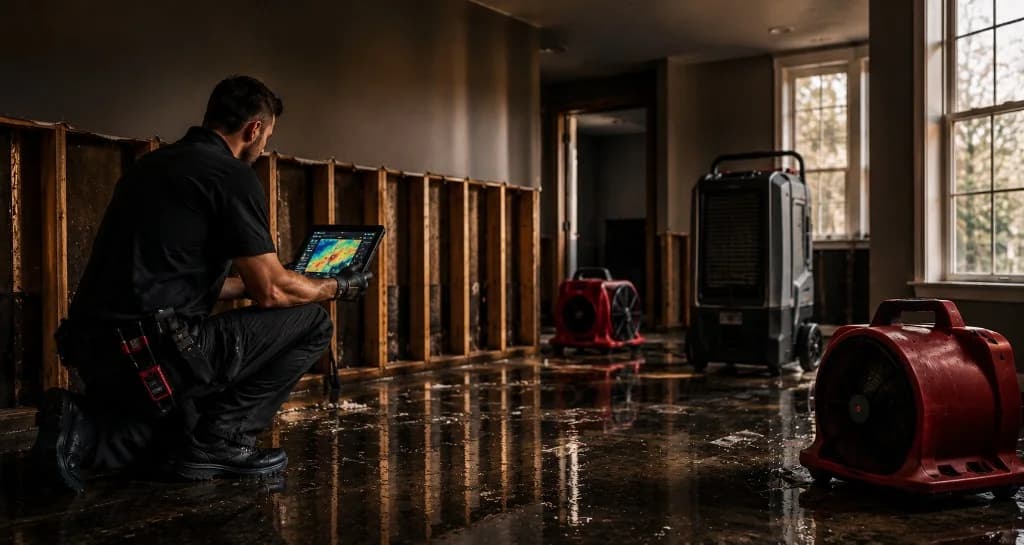
Water claim support
Built for mitigation, rebuilds, and documentation-heavy losses
Water losses move quickly and carriers scrutinize every detail. Claims Ninja helps restoration contractors organize the file, connect mitigation to reconstruction, and identify supplement opportunities.
Emergency Mitigation
Documentation support for dry-out, equipment, moisture mapping, demolition, containment, and carrier review.
Reconstruction Scopes
Scope development for drywall, flooring, cabinets, trim, paint, contents handling, and affected assemblies.
Complex Water Losses
Support for category/class considerations, multi-room damage, hidden moisture, access issues, and documentation-heavy claims.
How it works
From mitigation file to claim strategy
- 01
Submit Claim Materials
Upload photos, moisture readings, estimates, drying logs, equipment records, carrier correspondence, and rebuild details.
- 02
We Organize the Loss Picture
Our team reviews affected areas, drying documentation, demolition scope, rebuild requirements, and estimate gaps.
- 03
Supplement Opportunities Are Identified
We flag missing line items, pricing issues, scope gaps, and documentation needs that may warrant carrier review.
- 04
Contractor Gets a Clear Path Forward
You receive organized next steps, documentation direction, and claim support without building an internal claims department.
What we handle
Water damage claim details carriers love to question
Moisture Documentation
Moisture readings, dry logs, affected materials, equipment usage, and drying timelines should support the scope being presented.
Mitigation Scope
Water extraction, containment, demolition, antimicrobial treatment, equipment, monitoring, and labor details may require careful review.
Rebuild Scope Alignment
Drywall, insulation, flooring, trim, paint, cabinetry, and affected assemblies should connect cleanly to the mitigation file.
Category & Class Considerations
Category of water, class of loss, affected areas, and material porosity can shape documentation and estimate review.
Contents & Protection
Pack-out, manipulation, protection, cleaning, storage, and reset considerations may affect the claim depending on scope.
Carrier Documentation
Photos, notes, logs, invoices, estimates, and correspondence should tell one consistent story before submission.
Common water damage items that deserve a second look
Not every item is owed on every claim. These are common areas that may require review depending on documentation, policy, scope, and loss conditions.
- Moisture mapping and dry logs
- Equipment days and monitoring
- Content manipulation or pack-out
- Baseboard, trim, and paint transitions
- Drywall cuts and insulation
- Cabinet detach/reset or replacement
- Flooring removal and matching concerns
- Containment and dust protection
- Antimicrobial treatment
- Demo labor and debris handling
- Access, masking, and protection
- Rebuild scope alignment after mitigation
Frequently Asked Questions
Answers to common questions about water damage claims.
We review mitigation invoices, drying logs, moisture readings, and rebuild scopes for completeness. Common gaps include equipment days, containment, antimicrobial treatment, demolition, and rebuild line items carriers trim on first pass.
Daily moisture logs, equipment placement photos, atmospheric readings, and clear drying goals carry weight in review. Gaps in documentation often lead to reduced equipment days or disputed mitigation charges.
Yes. Our contractor resources library covers water mitigation supplements, dry logs, moisture mapping, equipment charges, monitoring visits, and denial recovery — written for field and supplement teams.
Yes. We ensure field notes, photos, and line items align with how the loss was classified. Misalignment between mitigation narrative and billed scope is a common reason carriers reduce payment.
Absolutely. Many water claims span emergency services and rebuild. We track both phases, compare carrier scopes to field conditions, and pursue missing items across mitigation and construction line items.
We separate mitigation documentation from rebuild estimating so carriers can follow the timeline. Clear phase separation reduces confusion when adjusters review equipment charges alongside finished reconstruction scope.
Ready when you are
Start with a free claim review
Tell us about your operation. We'll assess your claim workflow, identify recovery opportunities, and outline next steps.