Solutions
Mold Claims
We help restoration contractors organize mold remediation, containment, clearance, rebuild, and carrier documentation into claim support built for disputed or protocol-driven losses.
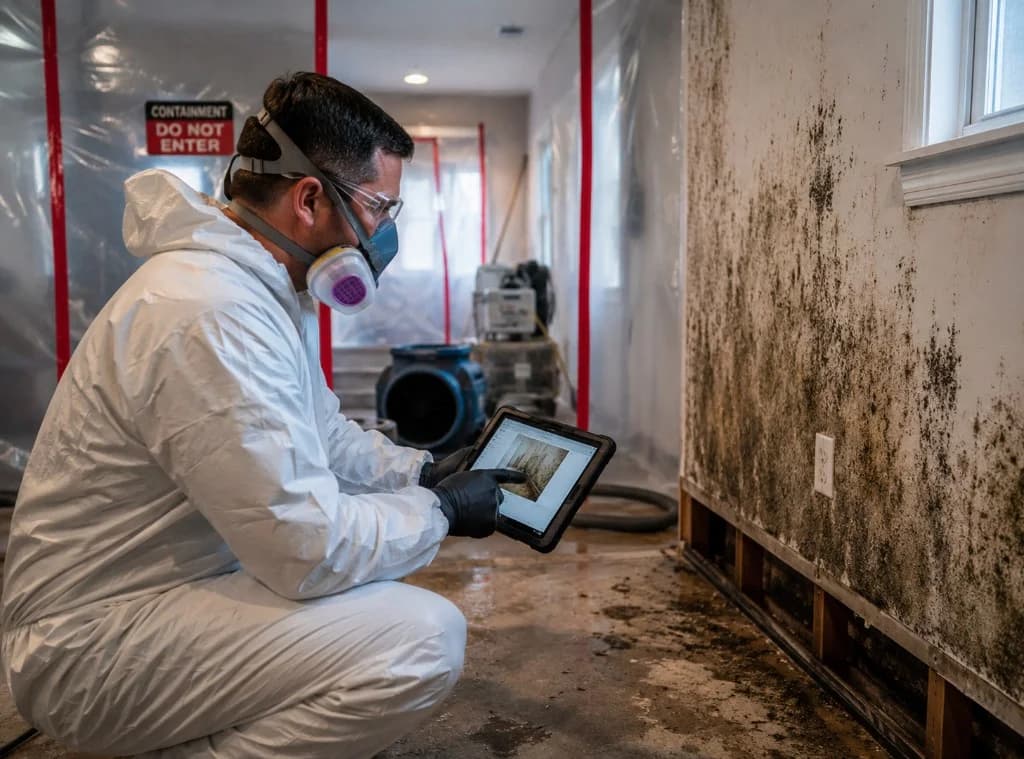
Mold claim support
Built for remediation scopes, containment work, and disputed files
Mold claims require clean documentation, careful scope alignment, and a clear connection between remediation, testing, rebuild work, and carrier review. Claims Ninja helps contractors build files that are easier to defend.
Remediation Protocols
Support for containment, demolition, cleaning, HEPA vacuuming, antimicrobial treatment, and protocol-driven scope review.
Clearance & Documentation
Help organizing photos, testing records, moisture data, remediation notes, and clearance-related documentation.
Rebuild Continuity
Scope support for drywall, insulation, trim, paint, flooring, cabinetry, and affected assemblies after remediation.
How it works
From mold file to claim strategy
- 01
Submit Claim Materials
Upload photos, inspection notes, remediation estimates, testing information, moisture readings, carrier letters, and rebuild details.
- 02
We Organize the Loss Picture
Our team reviews affected materials, containment needs, remediation scope, clearance documentation, rebuild requirements, and estimate gaps.
- 03
Supplement Opportunities Are Identified
We flag missing line items, pricing issues, documentation gaps, rebuild disconnects, and items that may warrant carrier review.
- 04
Contractor Gets a Clear Path Forward
You receive organized next steps, documentation direction, and claim support for mold files that carriers often scrutinize.
What we handle
Mold claim details carriers love to question
Containment Scope
Containment barriers, negative air, zipper doors, protection, and work-area separation should align with the protocol and affected areas.
Remediation Labor
Demolition, HEPA vacuuming, cleaning, antimicrobial treatment, detail labor, and material handling may require careful documentation.
Testing & Clearance
Lab results, clearance documentation, inspection notes, and testing requirements can shape the claim file and scope review.
Moisture & Source Documentation
Moisture readings, leak source details, affected assemblies, and dry-out history help connect the mold condition to the claim narrative.
Rebuild Scope Alignment
Drywall, insulation, trim, paint, flooring, cabinets, and affected finishes should connect cleanly to the remediation scope.
Dispute-Ready Files
Photos, notes, protocols, estimates, invoices, reports, and correspondence should tell one consistent story before carrier review.
Common mold claim items that deserve a second look
Not every item is owed on every claim. These are common areas that may require review depending on documentation, policy, protocol, scope, and loss conditions.
- Containment barriers and zipper doors
- Negative air equipment
- HEPA vacuuming and detail cleaning
- Antimicrobial treatment
- Selective demolition
- Protection and masking
- Moisture readings and source documentation
- Testing or clearance documentation
- Debris handling and disposal
- Rebuild scope after remediation
- Contents manipulation or protection
- Documentation gaps that trigger carrier pushback
Frequently Asked Questions
Answers to common questions about mold claims.
Carriers typically review moisture source documentation, remediation protocol, containment detail, air scrubbing, and clearance testing where required. Photos, room-by-room scope, and alignment with IICRC-oriented practices strengthen the file.
Pre- and post-remediation testing can support scope justification and clearance verification. We help organize lab results and tie them to billed line items so adjusters understand why testing was necessary.
Mold coverage varies by policy and causation. Carriers question whether damage resulted from a covered water event versus long-term conditions. Strong documentation on sudden water intrusion and timely mitigation helps address those reviews.
They can be. Negative air, HEPA filtration, and containment labor are frequently trimmed on initial scopes. We compare your field setup to carrier line items and pursue gaps when documentation supports the work performed.
Yes. Mold often follows an underlying water event. Linking moisture source documentation, drying history, and remediation scope helps carriers follow the causal chain on the file.
Ready when you are
Start with a free claim review
Tell us about your operation. We'll assess your claim workflow, identify recovery opportunities, and outline next steps.